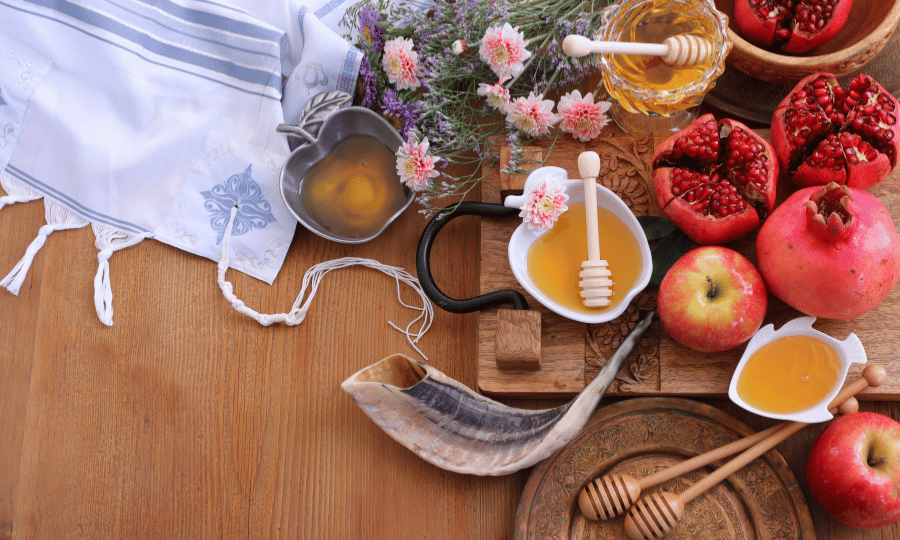
Food is one of the most meaningful parts of Rosh Hashanah. Alongside prayer and reflection, the holiday table carries its own kind of symbolism: nearly every dish served is chosen deliberately, as a small, tangible way of expressing hope for the year ahead. Sweetness for a good year, roundness for a year without end, abundance for blessing. Even if you're new to the holiday, or getting to know it through someone you care about, these food customs offer a warm and easy way in.
Here's a look at the foods most commonly found on the Rosh Hashanah table, what they represent, and when they're traditionally eaten:
- Apples & Honey
- Round Challah
- Pomegranate
- Fish or Ram's Head
- Carrots
- Dates
- Foods to Avoid
- The Simanim Seder
1. Apples & Honey
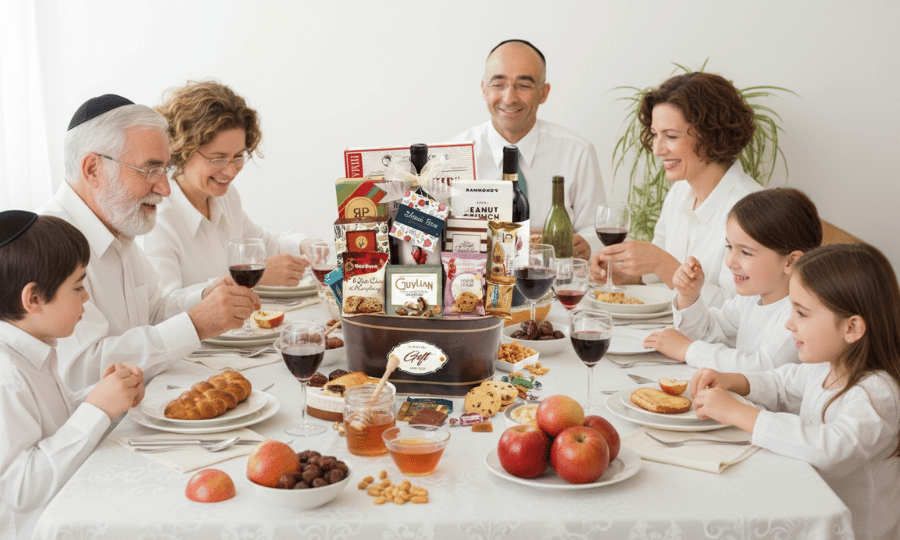
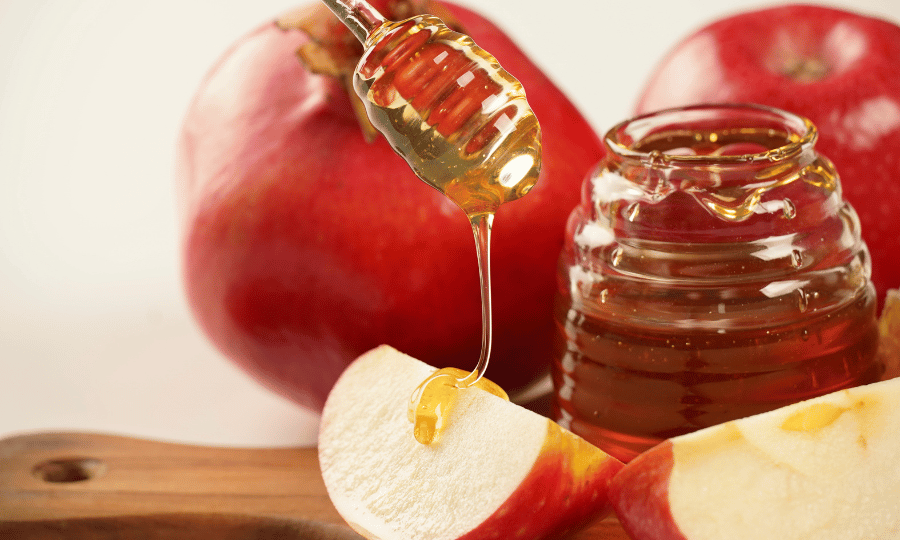
The most well-known Rosh Hashanah custom by far: slices of apple dipped in honey, eaten at the start of the meal on the first night of the holiday. The apple's crisp, fresh taste paired with the sweetness of honey is a simple, edible wish that the new year ahead will be a sweet and good one. It's typically the very first food eaten once the family gathers at the table, often accompanied by a short blessing before the rest of the meal begins.
Beyond the apple slices themselves, this pairing shows up throughout the meal in other forms. A classic honey cake (also known by its Yiddish name, lekach) is a Rosh Hashanah baking staple, and apple honey cake or a simple baked apple with cinnamon and honey are popular ways to carry the tradition through dessert.
2. Round Challah
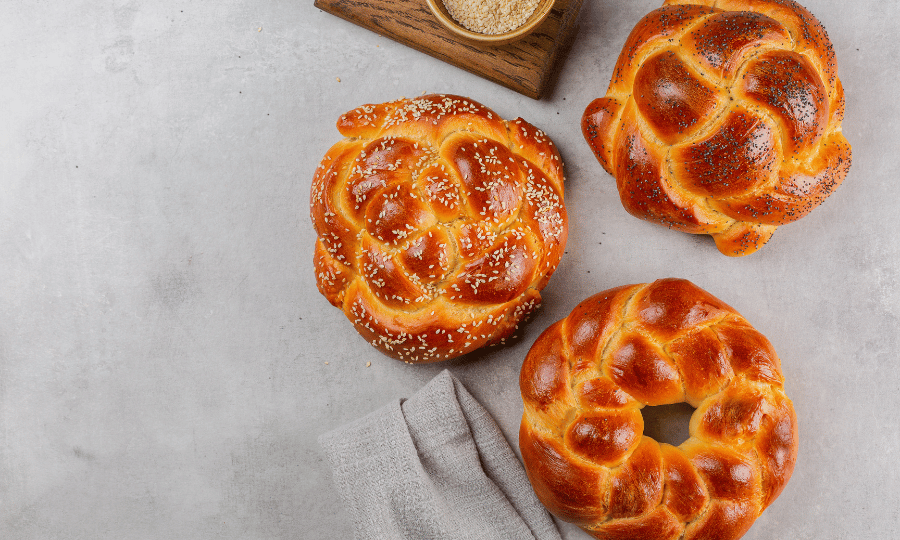
For most of the year, challah is braided into a long loaf. For Rosh Hashanah, it's shaped into a circle instead, a small but meaningful change that represents the continuous, unbroken cycle of the year, and life itself. Some families also add raisins to the dough for an extra touch of sweetness, fitting for the occasion.
Round challah is typically served alongside the apples and honey at the start of the meal, often dipped in honey rather than salt, which is the more traditional pairing for the rest of the year. It's less about the recipe itself and more about the shape, so most families lean on their usual go-to challah recipe and simply braid or coil it into a round loaf for the occasion.
3. Pomegranate
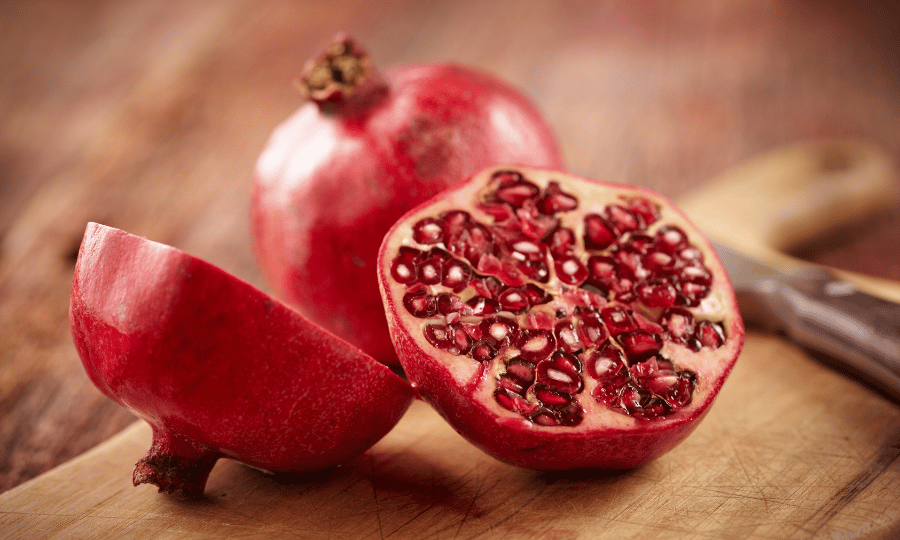
The pomegranate holds a special place on the Rosh Hashanah table because of its seeds. According to tradition, a pomegranate contains 613 seeds, matching the number of mitzvot (commandments) in the Torah, making it a natural symbol for a year filled with good deeds. Some families also simply enjoy it as a way of wishing for a year as full and abundant as the fruit itself.
It's typically eaten as part of the meal or as a simple side, often just the fresh arils on their own. For a slightly more involved dish, pomegranate seeds are a lovely addition to a pomegranate and walnut salad, and pomegranate-glazed chicken is a popular main course that works the symbolism directly into the holiday's centerpiece dish.
4. Fish or Ram's Head
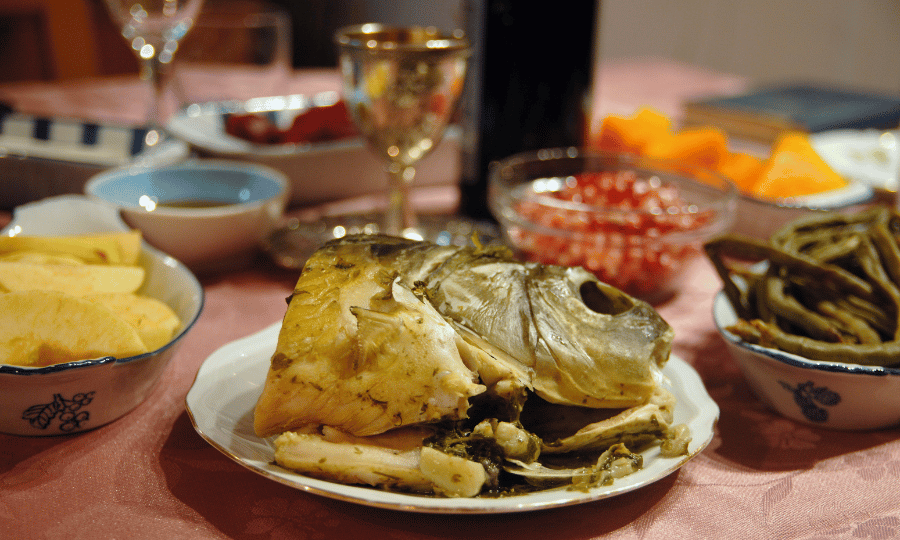
This is one of the lesser-known customs outside observant households, but it carries real meaning. The Hebrew name of the holiday, Rosh Hashanah, translates literally to "head of the year," and some families mark that connection by serving the head of a fish or a ram at the meal, along with a wish to "be like the head and not the tail," leading with intention rather than simply following.
It's a tradition rooted more in symbolism than in taste, and it's far from universal. Many families today substitute it with something gentler, like a whole cooked fish, or skip it altogether in favor of the other symbolic foods. If you do want to include it, a simple whole roasted fish is the most common and approachable way to take part in the custom.
5. Carrots
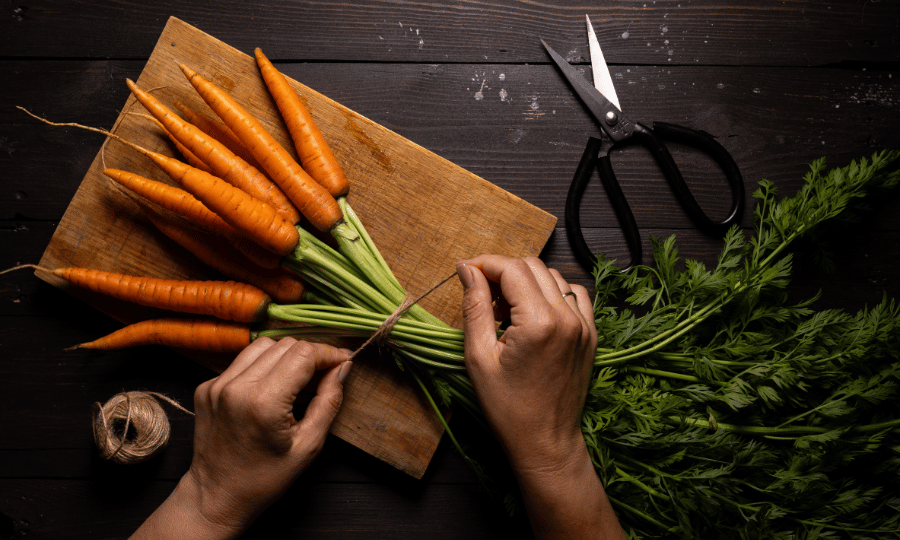
Carrots are another popular addition to the Rosh Hashanah table, most often sliced into rounds that resemble coins. The shape and color are meant to symbolize prosperity and abundance for the year ahead. In Yiddish tradition, carrots are also tied to the word mehren, meaning "to increase," reinforcing the wish for growth and blessing in the year to come.
They're typically served as a side dish rather than a standalone course. Tzimmes, a sweet, slow-cooked carrot dish (often made with dried fruit and a touch of honey or brown sugar) is the classic way carrots show up on the table, and honey-glazed carrots are a simpler, quicker alternative that carries the same symbolism.
6. Dates
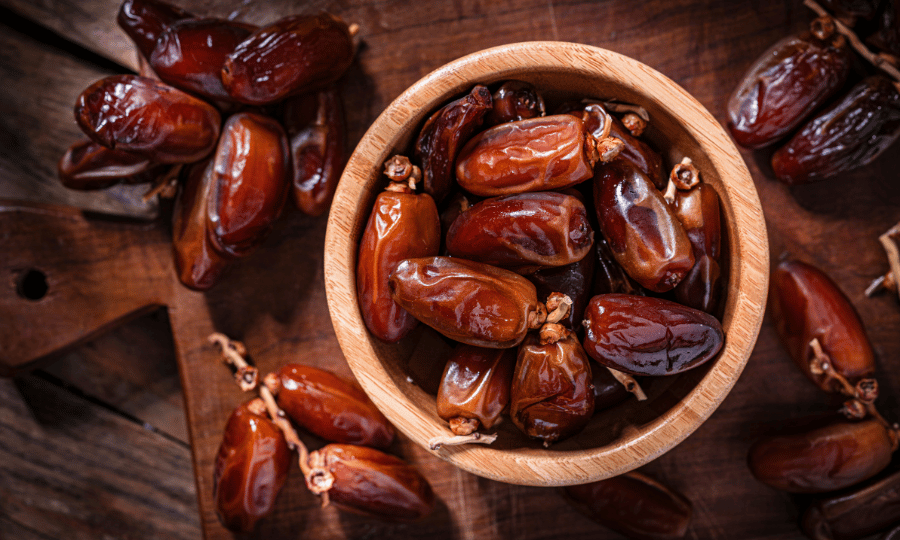
Dates are one of the sweeter, simpler additions to the table, and their symbolism plays on language: the Hebrew word for date, tamar, sounds similar to the word for "to end" or "to finish," so eating dates carries a wish that difficulties or enemies come to an end in the year ahead. Alongside that meaning, they're also just a naturally sweet fruit, well suited to a holiday built around wishes for a sweet year.
Dates are often eaten simply on their own or alongside the other symbolic foods early in the meal. For something a little more festive, date and honey cake is a popular dessert, and dates are also a natural addition to a charoset-style fruit and nut relish served alongside the main meal.
7. Foods to Avoid
Just as some foods are chosen for their symbolism, others are traditionally left off the table. Sour, bitter, or vinegar-based dishes are generally avoided, since the meal is meant to reflect hope for a sweet year rather than a sharp or difficult one. Nuts are also commonly skipped in some households, based on a numerological connection between the Hebrew word for nut and the word for sin, so leaving them out is a small, symbolic way of starting the year with a clean slate.
None of this is strict or universal, and it varies from family to family and community to community. It's less a set of rules and more a gentle extension of the same idea running through the rest of the meal: choosing foods that reflect the kind of year you're hoping for.
8. The Simanim Seder
Beyond the individual foods above, some families, particularly those with Sephardic, Mizrahi, or Persian roots, take part in a more structured tradition called the Simanim seder. It's a short ritual held before the meal, where a set of symbolic foods are eaten one at a time, each paired with its own blessing tied to a wish for the coming year. Leeks, beets, squash, and black-eyed peas are common additions, alongside foods like the ones covered above.
This is a rich tradition with real depth to it, more than we can properly cover here. If it's part of your own background, or you'd simply like to learn more, it's well worth exploring further through your community or a rabbi, since the customs and blessings can vary meaningfully between families and traditions.
However You Celebrate
However your family marks the day, food has a way of carrying meaning that words alone can't always capture, and Rosh Hashanah's table is full of it. One small, sweet, hopeful dish at a time. The meal is just one part of a holiday full of meaningful customs, and if you're looking for a way to bring some of that same sweetness to someone you care about, a thoughtful Rosh Hashanah gift is a lovely way to do it.
Wishing you and your loved ones a sweet, meaningful new year.